Designing for the Indian Joint Family: Spaces That Flex, Last, and Breathe
- June 9, 2026
Introduction: Designing for Real Life, Not Just Design Catalogues
Most home interior design guides are created around a simple idea—a small family living in a carefully curated space. But Indian homes often tell a very different story.
In many households, grandparents, parents, children, and even extended family members live together under one roof. A living room may host guests during the afternoon, become a study zone in the evening, and transform into a family gathering space at night. Bedrooms double as home offices, while kitchens work continuously from morning tea to late-night snacks.
Designing for an Indian joint family is not simply about aesthetics. It is about creating spaces that can adapt, endure, and support daily life without compromise.
This is where material selection becomes just as important as design. Choosing the right plywood for interior applications ensures that furniture, storage systems, and wall structures remain strong despite years of heavy use.
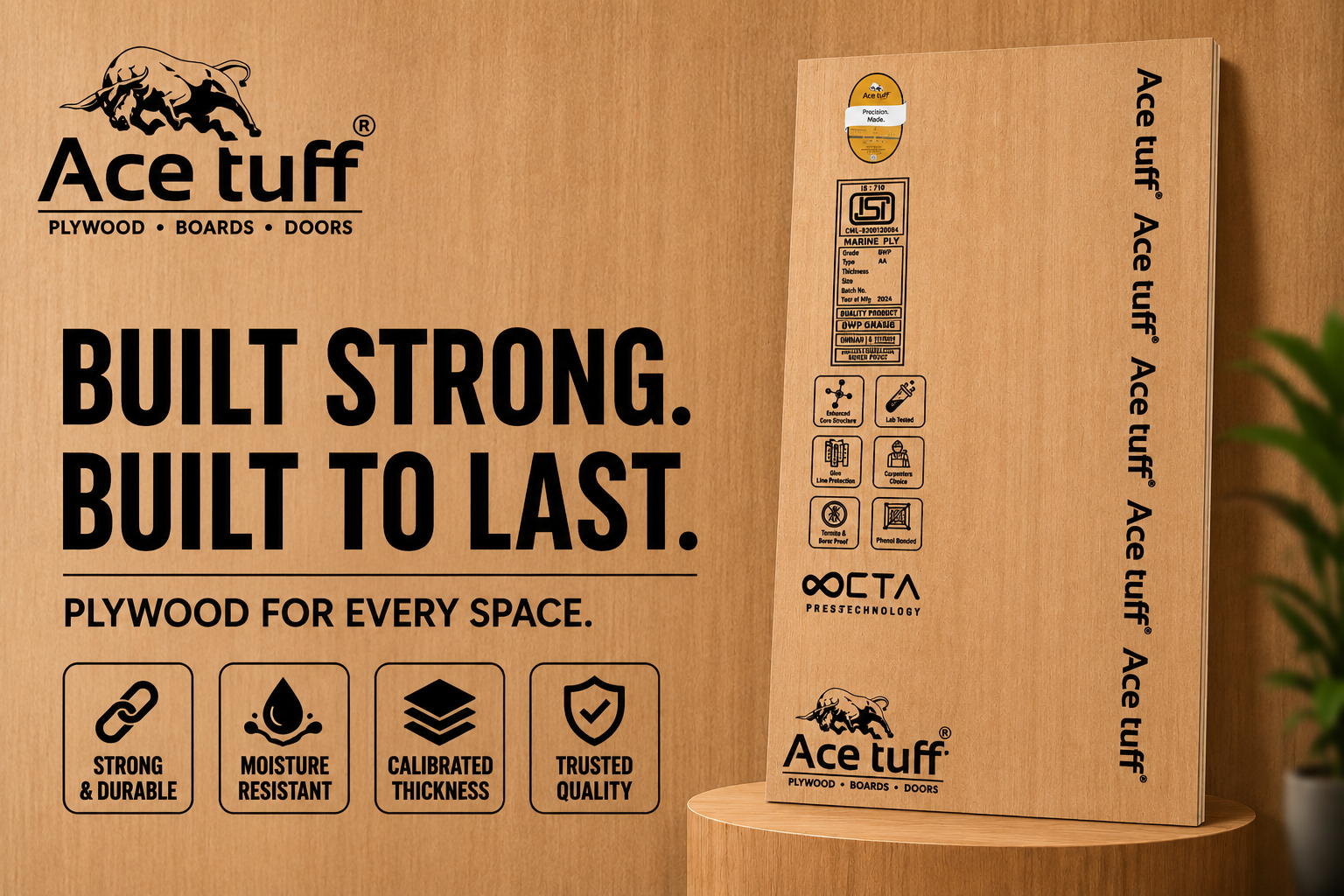
Ace Tuff Ply understands these challenges and offers solutions designed for homes that are constantly in motion.
Pro Tip
Before selecting furniture designs or décor themes, evaluate how many people will use each space daily. Usage patterns should guide material choices.
What the Space Demands
Interior Materials as Infrastructure, Not Decoration
When people think about interiors, they often focus on visible elements such as colors, furniture styles, and decorative accessories.
However, the true strength of any interior lies beneath the surface.
Plywood for interior applications acts as the structural backbone of:
- Wardrobes
- Kitchen cabinets
- Storage units
- Wall panels
- Shelving systems
- Decorative wall installations
A beautiful cabinet may look impressive on day one, but if its internal structure is weak, it can begin to sag, warp, or deteriorate within a few years.
Real-Life Scenario
Imagine a family of ten sharing a home. Every wardrobe is opened dozens of times each day. Kitchen cabinets store heavy utensils and groceries. Shelves carry books, decorations, and electronics.
In such environments, plywood sheets are constantly under pressure. The wrong material can fail quickly, while the right one performs reliably for years.
Key Takeaway
The best interior materials are those that continue performing long after installation.
Types of Interior Applications That Depend on Quality Plywood
1. Plywood Sheets in Furniture
Furniture forms the foundation of everyday living.
Applications include:
- Wardrobes
- Cabinets
- Study tables
- Storage units
- TV units
- Bookshelves
Quality plywood helps maintain structural stability and prevents bending or deformation over time.
Pro Tip
For large wardrobes and storage units, always choose plywood designed to handle continuous loading.
2. Plywood for Interior Walls
Modern interior design increasingly incorporates wall panels, decorative cladding, and custom wall features.
Behind these stylish finishes lies a plywood substrate that provides:
- Structural support
- Surface stability
- Long-term durability
Without a strong base, decorative finishes may crack, bubble, or detach over time.
Pro Tip
Invest in quality plywood for interior walls if you plan to install wall panels or decorative features.
3. Kitchen Cabinetry Cores
The kitchen is often the busiest space in a joint family home.
Cabinets face constant exposure to:
- Steam
- Heat
- Moisture
- Frequent cleaning
Using moisture-resistant plywood helps maintain cabinet integrity despite these challenges.
Pro Tip
Always prioritize moisture-resistant plywood grades for kitchen applications.
4. Wall Décor for Living Rooms
Large decorative panels, wall art, and custom installations require a reliable foundation.
A stable plywood base prevents:
- Surface separation
- Cracking
- Peeling veneers
- Joint movement
Key Takeaway
Beautiful wall décor lasts longer when built on strong structural materials.
Design Ideas for Indian Joint Family Homes
1. Living Rooms That Handle Constant Activity
Living room interior design in a joint family home must accommodate multiple activities simultaneously.
One day it hosts relatives visiting from another city. The next day it becomes a study area for children and a relaxation zone for grandparents.
The furniture and supporting materials must withstand continuous use without losing strength or appearance.
Pro Tip
Choose furniture designs that offer flexible seating and built-in storage for maximum functionality.
2. Multi-Purpose Rooms That Adapt Effortlessly
Modern homes often require rooms to serve more than one purpose.
For example:
- Home office during the day
- Guest room at night
- Hobby room on weekends
This constant transition places additional pressure on furniture and storage systems.
Strong plywood ensures these spaces remain functional despite frequent rearrangement.
Key Takeaway
Flexibility in design starts with durability in materials.
3. Kitchens Built for Full-Capacity Operations
In joint families, kitchens rarely get downtime.
Meals are prepared throughout the day, creating constant exposure to moisture and heat.
High-quality plywood helps kitchen cabinetry maintain its structure despite these demanding conditions.
Pro Tip
Look beyond surface finishes and focus on the quality of the cabinet core material.
4. Wall Décor That Withstands Daily Contact
Living room walls in family homes experience far more interaction than many homeowners expect.
Children play nearby, furniture gets moved, and decorative elements encounter regular wear.
Stable plywood foundations help wall décor maintain its appearance over the long term.
Key Takeaway
Durability should be considered a design feature, not an afterthought.
5. Storage Solutions That Don’t Sag Over Time
Storage requirements increase significantly in larger families.
Wardrobes, lofts, cabinets, and shelves often carry substantial weight year-round.
Quality plywood sheets help maintain structural integrity and reduce the risk of shelf sagging.
Pro Tip
Consider future storage needs, not just current requirements, when designing wardrobes and cabinets.
6. Spaces Designed for Generational Use
Joint family homes are shared by people of all ages.
Furniture must withstand:
- Active children
- Working adults
- Elderly family members
Durability becomes essential when multiple generations interact with the same furniture every day.
Key Takeaway
Materials that perform consistently across generations offer the best long-term value.
How to Choose the Right Plywood Variant
Start with Usage Load, Not Layout
Many homeowners begin with design plans and room layouts.
A smarter approach is to evaluate:
- Number of daily users
- Frequency of use
- Weight-bearing requirements
- Environmental conditions
The greater the usage load, the stronger the plywood should be.
Pro Tip
Treat the number of users as a material specification rather than just a lifestyle detail.
Why 19mm Thickness Matters
Calibrated 19mm plywood is commonly preferred for furniture and cabinetry because it provides:
- Enhanced strength
- Better screw holding
- Improved dimensional stability
- Reduced risk of deformation
Key Takeaway
Thickness directly influences furniture durability and performance.
Understanding BWR vs MR Grade Plywood
BWR (Boiling Water Resistant)
Suitable for:
- Kitchens
- Utility areas
- High-moisture environments
Benefits include:
- Better moisture resistance
- Improved longevity
- Greater structural stability
MR (Moisture Resistant)
Suitable for:
- Dry interior spaces
- Low-moisture applications
Not ideal for areas exposed to frequent humidity or water contact.
Pro Tip
For kitchens and heavily used spaces, BWR-grade plywood is often the more dependable choice.
Budget vs Longevity: Making the Right Decision
Many homeowners focus on reducing initial costs.
However, lower-quality materials often lead to:
- Repairs
- Replacements
- Additional labor expenses
- Ongoing maintenance
Investing in quality plywood reduces long-term ownership costs and improves overall performance.
Real-Life Example
A wardrobe built using premium plywood may continue performing reliably for years, while a lower-grade alternative may require repairs much sooner.
Key Takeaway
The most affordable solution is often the one that lasts the longest.
Benefits of Using Ace Tuff Ply
Materials That Earn Their Place
Ace Tuff Ply is designed for homes where furniture and interiors face continuous use.
Advantages Include:
Engineered for High-Use Environments
Supports demanding applications such as:
- Wardrobes
- Kitchen cabinets
- Storage systems
- Wall paneling
Stability Across Changing Conditions
Maintains performance despite:
- Humidity
- Heat
- Daily usage
Versatility Across Applications
Suitable for:
- Furniture manufacturing
- Kitchen cabinetry
- Interior wall solutions
- Decorative panel systems
Long-Term Durability
Helps reduce common issues such as:
- Warping
- Sagging
- Structural weakening
Pro Tip
Choose materials based on expected lifespan rather than short-term appearance.
Real Applications in Modern Homes
Living Room Interior Design
Supports large gatherings while maintaining structural reliability.
Kitchen Cabinetry
Performs consistently in high-humidity cooking environments.
Bedroom Storage
Handles heavy daily usage and long-term storage requirements.
Children’s Rooms
Provides strength and stability in active environments.
Wall Décor for Living Rooms
Offers a dependable base for decorative wall treatments.
Key Takeaway
A single high-quality plywood solution can support multiple applications throughout the home.
Common Mistakes to Avoid
Designing for Aesthetics Alone
Beautiful interiors should also be functional and durable.
Choosing the Wrong Plywood Grade
Using MR-grade plywood in moisture-prone areas can lead to premature failure.
Ignoring User Load
Large families create greater wear and tear on furniture and storage systems.
Using Poor Substrates for Wall Décor
Weak substrates often result in peeling finishes and visible defects.
Underestimating Long-Term Wear
Daily usage compounds over time and can expose weaknesses in material quality.
Pro Tip
Always evaluate how a space will function five years from now, not just how it looks today.
Buying Guide: What to Consider Before Purchasing Plywood
When selecting plywood for interior applications, focus on practical performance factors:
Ask Yourself:
- How many people use this space daily?
- How much weight will the furniture carry?
- Will the area be exposed to moisture?
- How long do I expect the furniture to last?
- Is durability more important than short-term savings?
Answering these questions helps you choose materials that support long-term performance.
Final Thoughts: Built for the Lives You Actually Live
Designing an Indian joint family home requires a different mindset.
It is not just about creating beautiful interiors—it is about creating spaces that can adapt to constant activity, multiple generations, and years of everyday use.
Whether you are planning living room interior design, kitchen cabinetry, wall décor for living rooms, or large-scale storage solutions, the foundation always matters.
By selecting quality plywood for interior applications, homeowners can build spaces that remain strong, functional, and visually appealing long after installation.
Ace Tuff Ply supports this approach by focusing on durability, stability, and performance—helping families create homes that are designed not only for today but for the decades ahead.