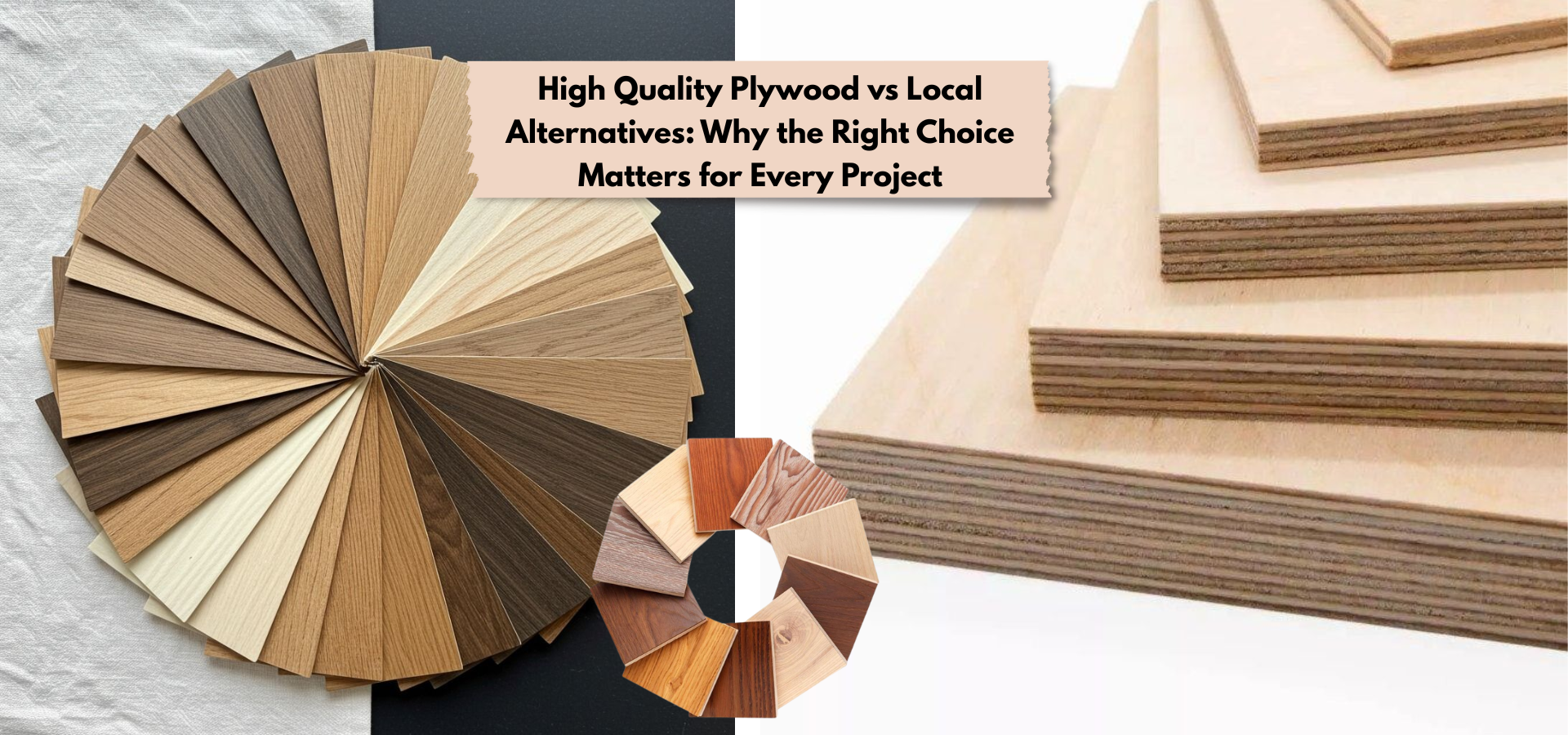
High Quality Plywood vs Local Alternatives: Why the Right Choice Matters for Every Project
- December 24, 2025
The plywood you select can make or break your construction project. Builders and homeowners often face a familiar dilemma—choose certified, branded plywood like Acetuff Ply, or save upfront by opting for cheaper local alternatives.
At first glance, the difference may seem minimal. But over time, this decision impacts structural strength, durability, safety, and long-term maintenance costs. Understanding how high-quality plywood differs from non-certified options helps you avoid mistakes that become expensive—and reputation-damaging—later.
Why High Quality Plywood Delivers Consistent Performance
High quality plywood is engineered for reliability across residential and commercial applications. Brands like Acetuff Ply follow strict manufacturing standards, ensuring every sheet performs consistently—whether it’s used in furniture, flooring, partitions, or structural work.
Certified plywood undergoes rigorous testing for:
- Bonding strength
- Moisture resistance
- Dimensional stability
- Load-bearing capacity
These benchmarks ensure your project stands the test of time, without premature deterioration or safety risks.
Pro Tip
✔ Always treat plywood as a long-term investment, not a short-term material cost.
Understanding Quality Benchmarks in Plywood Manufacturing
1. Bonding Strength Standards
The adhesive used between plywood layers plays a critical role in durability. Premium plywood manufacturers, including Acetuff Ply, use phenol-formaldehyde resins that create waterproof, heat-resistant bonds.
Local plywood often relies on cheaper adhesives that:
- Break down in humidity
- Cause delamination
- Fail under temperature fluctuations
Real-World Scenario
A kitchen cabinet made with low-bond plywood may start peeling within a year, while certified plywood remains intact for decades.
Pro Tip
✔ Ask your supplier about the resin type used—not just the plywood grade.
2. Resistance to Bending and Warping
Quality plywood is designed to stay dimensionally stable in varying climates. Carefully selected and balanced core veneers prevent:
- Twisting
- Cupping
- Warping after installation
Low-grade plywood lacks this balance, forcing builders to redo work when panels distort.
Pro Tip
✔ Stable plywood saves money by reducing rework and callbacks.
3. Surface Finish Consistency
Premium plywood offers:
- Uniform thickness
- Smooth, defect-free surfaces
- Better laminate and paint adhesion
Acetuff Ply sheets minimize the need for sanding, filling, or surface correction—saving both time and labour.
Pro Tip
✔ A better surface finish means faster installation and cleaner aesthetics.
The Hidden Costs of Low-Grade Plywood
1. Structural Failures in Load-Bearing Applications
Unverified plywood often contains:
- Internal voids
- Weak core species
- Inconsistent thickness
These hidden defects compromise strength in flooring, roofing, and wall panels—leading to cracks, sagging, or structural failure.
Pro Tip
✔ Never risk structural elements with non-certified plywood—liability costs far exceed savings.
2. Moisture Damage and Fungal Growth
Low-quality plywood absorbs moisture easily, causing:
- Swelling
- Delamination
- Rot and fungal growth
Repairing moisture damage inside walls or furniture costs far more than choosing the right plywood initially.
Pro Tip
✔ Prevention through quality plywood is cheaper than remediation.
3. Termite Vulnerability
Untreated or poorly treated plywood becomes a food source for termites. Certified brands like Acetuff Ply apply preservatives that penetrate deep into the layers, offering long-term protection.
Pro Tip
✔ Termite resistance is not optional—it’s essential for Indian conditions.
Meeting Industry Standards Through Certification
BIS Certification Requirements
High quality plywood complies with Bureau of Indian Standards (BIS) codes such as:
- IS:303 (Commercial plywood)
- IS:710 (Marine & BWP plywood)
Acetuff Ply follows these standards through regular inspections and quality audits, ensuring traceability and accountability.
Pro Tip
✔ Always check for ISI marks and certification numbers on plywood sheets.
Laboratory Testing Protocols
Reputed manufacturers test plywood for:
- Boiling water resistance
- Static bending strength
- Moisture content control
- Formaldehyde emission safety
These tests ensure safety, durability, and indoor air quality.
Pro Tip
✔ Certified test results protect both builders and homeowners.
Performance Guarantees
Certified plywood comes with manufacturer warranties, offering protection against defects and performance failures. Local alternatives rarely provide such assurance, shifting all risk to the builder.
Pro Tip
✔ Warranty equals confidence—both for you and your client.
Expert Recommendations for Choosing the Right Plywood
Verify Certification Before Purchase
- Check BIS markings
- Ask for test certificates
- Buy from trusted brands like Acetuff Ply
Calculate True Project Costs
Cheap plywood increases:
- Waste
- Installation time
- Repair expenses
Premium plywood often costs less over the full project lifecycle.
Build Long-Term Supplier Relationships
Reliable manufacturers provide:
- Consistent quality
- Technical support
- On-time availability
This improves project timelines and strengthens your professional reputation.
Pro Tip
✔ Builders known for quality materials win repeat clients and referrals.
Conclusion: Choose Quality That Protects Your Reputation
Choosing between high quality plywood and local alternatives defines the success of your project. Certified materials like Acetuff Ply deliver the strength, durability, and reliability that modern construction demands.
The risks of unverified plywood—structural failure, moisture damage, termite infestation—far outweigh any short-term savings.
Make informed decisions. Verify certifications. Choose proven quality.
Because great projects deserve plywood that delivers lasting value and peace of mind.