How to Spot Fake or Substandard Plywood Before You Buy
- May 27, 2026
You finally select a plywood sheet after weeks of comparing prices, checking samples, and visiting different stores. The board looks smooth, the dealer sounds convincing, and the price feels like a smart deal.
But a few months later, the reality starts showing.
The kitchen cabinet begins swelling near the sink. Wardrobe edges start peeling. Furniture screws loosen slowly, and the polished surface develops bubbles after moisture exposure.
This is how substandard plywood usually fails. It may look fine on day one, but poor-quality materials rarely survive long-term use.
That is why understanding how to identify good-quality plywood before buying is extremely important. A little awareness at the start can save homeowners from expensive repairs, repeated replacements, and furniture damage later.
Why Choosing the Right Plywood Matters More Than You Think
In Indian homes, furniture handles daily pressure quietly in the background.
Kitchen cabinets deal with steam and moisture every single day. Wardrobes carry heavy loads for years. TV units, beds, storage systems, and study tables go through continuous usage without much attention.
When the plywood underneath is weak, the problems appear gradually:
- Surface bubbling
- Edge swelling
- Bending or warping
- Loose screws
- Cracks in laminates
- Reduced furniture strength
A family renovating their kitchen often focuses heavily on laminates and finishes but ignores the core plywood quality inside. Six months later, water leakage near the sink begins damaging the cabinet structure from within.
The finish may still look attractive from outside, but internally, the board starts weakening.
That is why plywood quality should never be judged only by appearance.
Pro Tip:
Always inspect what is inside the furniture structure, not just the outer laminate or polish.
What Actually Determines the Plywood Price
One of the biggest reasons buyers get confused is pricing.
Plywood price in India varies widely depending on quality, grade, manufacturing process, and certifications. Some sheets are available at very low rates, while premium certified plywood costs significantly more.
The difference is not just branding.
It usually reflects durability, moisture resistance, adhesive quality, and long-term performance.
1. Plywood Grade Makes a Huge Difference
Plywood grades directly affect durability and application.
MR Grade (Moisture Resistant)
Suitable for dry indoor furniture like wardrobes and bedroom furniture.
BWR Grade (Boiling Water Resistant)
Designed for areas exposed to moderate moisture.
BWP Grade (Boiling Waterproof)
Made for kitchens, bathrooms, and high-moisture areas where long-term water exposure is common.
Unfortunately, many low-quality sellers label ordinary boards as “waterproof” without proper certification.
Real-World Example:
A homeowner installs “BWP plywood” in a modular kitchen after getting a very cheap deal. Within one monsoon season, the cabinet edges begin swelling because the material was actually lower-grade plywood sold under false claims.
Pro Tip:
Always ask for IS certification details before trusting waterproof claims.
2. Thickness Impacts Strength and Durability
Plywood sheets are available in different thicknesses, usually ranging from 4mm to 25mm.
Using thinner boards for heavy furniture creates long-term structural problems.
For example:
- Thin plywood in wardrobes may bend over time.
- Weak kitchen shelves may sag under utensil weight.
- Low-thickness bed support panels can weaken faster.
Pro Tip:
Choose plywood thickness according to furniture load and application, not only budget.
3. Core Quality Separates Premium from Fake Plywood
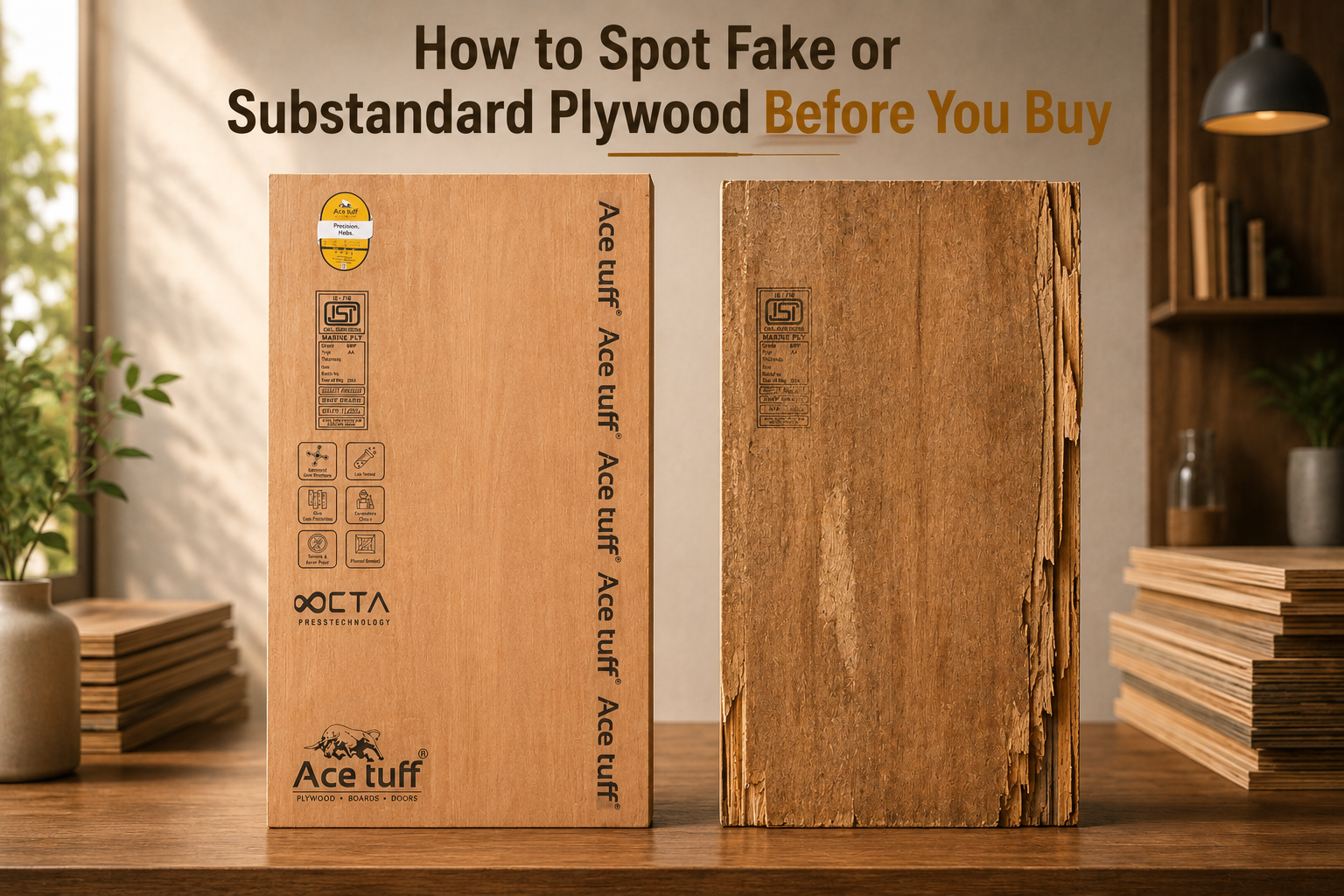
The internal core is where premium plywood truly differs from low-quality alternatives.
Good-quality plywood uses:
- Uniform veneers
- Proper layer bonding
- Calibrated thickness
- Strong adhesive technology
Substandard plywood often contains:
- Uneven layers
- Low-density filler material
- Weak bonding
- Poor-quality wood species
At first glance, both may appear similar. But over time, weak core material causes furniture failure.
Simple Test:
Check the side edges of the plywood sheet.
Uniform, tightly packed layers usually indicate better manufacturing quality.
How to Identify Fake or Substandard Plywood
Many buyers only inspect the surface. But experienced carpenters often check multiple factors before approving plywood quality.
Here are some practical ways to identify fake plywood before purchase.
Check for Certifications
Certified plywood follows manufacturing standards for strength, durability, and moisture resistance.
Look for:
- IS certification
- FSC certification
- Low-emission standards
- Manufacturer warranty markings
If no certification is mentioned anywhere, treat that as a warning sign.
Pro Tip:
Always verify whether the certification details are printed directly on the plywood sheet.
Examine the Surface Carefully
Low-quality plywood often reveals defects upon close inspection.
Watch for:
- Uneven finishing
- Cracks
- Gaps near edges
- Surface bubbles
- Poor laminate bonding
Premium plywood usually has a cleaner and more balanced finish.
Perform the Tap Test
Experienced carpenters often use a simple tapping method.
Tap different areas of the plywood lightly.
- A solid, dense sound usually indicates better bonding.
- Hollow or inconsistent sounds may suggest internal gaps or weak layers.
Pro Tip:
Never buy plywood without physically inspecting at least one sample sheet.
Check Weight and Density
Good plywood generally feels denser and stronger.
Very lightweight boards may contain weak filler material or poor-quality veneers.
However, weight alone should not be the only deciding factor.
How to Buy Plywood Online Without Getting Misled
Today, many homeowners compare plywood price online before visiting stores.
Online research is useful, but it also increases the risk of misleading product listings.
What to Verify Before Buying Online
Always check whether the listing clearly mentions:
- Grade (MR, BWR, BWP)
- Thickness
- IS certification
- Brand name
- Warranty information
Generic descriptions like “commercial waterproof plywood” without proper specifications should be avoided.
Pro Tip:
If the plywood price seems unusually low compared to market rates, investigate carefully before purchasing.
Buy Only from Authorised Sellers
Authorised dealers usually provide:
- Original product documentation
- Batch traceability
- Warranty support
- Authentic product assurance
Grey-market sellers often cannot provide any of these.
Real-World Scenario:
A buyer orders plywood online at a discounted price without verifying the seller. The delivered material turns out to be lower thickness than promised, and replacement becomes difficult because there is no authorised support.
Why Good-Quality Plywood Saves Money Long-Term
Many buyers focus only on initial plywood price.
But long-term performance matters much more.
Cheap plywood may reduce upfront costs, but repeated repair expenses eventually become higher.
Durability
Premium plywood maintains structural stability for years.
Substandard plywood may start showing:
- Delamination
- Swelling
- Cracking
- Surface damage
within a short period.
Better Moisture Resistance
High-quality BWP plywood is manufactured using advanced adhesive systems designed to resist prolonged moisture exposure.
This becomes extremely important in:
- Kitchens
- Bathrooms
- Utility areas
- Coastal regions
Safer Indoor Air Quality
Low-quality plywood may use cheaper adhesives that release harmful emissions over time.
Premium plywood with low-emission standards helps create healthier indoor environments, especially for bedrooms and children’s rooms.
Pro Tip:
Always prioritise low-emission plywood for indoor residential furniture.
Stronger Furniture Performance
Good-quality plywood improves:
- Screw holding capacity
- Furniture stability
- Surface finish durability
- Long-term structural strength
This directly impacts the lifespan of wardrobes, beds, modular kitchens, and storage furniture.
What Makes Acetuff Ply a Reliable Choice
When selecting plywood, consistency and manufacturing quality matter more than short-term discounts.
Acetuff Ply focuses on:
- Precision-calibrated plywood
- Strong core bonding
- Moisture-resistant performance
- Reliable structural durability
- Consistent thickness accuracy
- Long-term furniture strength
Every plywood sheet plays a major role in how furniture performs over the years, especially in Indian weather conditions where moisture, heat, and continuous usage affect interiors regularly.
Final Thoughts
Spotting fake or substandard plywood before buying is absolutely possible when you know what to check.
Instead of focusing only on plywood price, pay attention to:
- Certifications
- Core quality
- Thickness
- Moisture resistance
- Seller authenticity
- Manufacturing standards
Good-quality plywood may cost slightly more initially, but it protects your furniture, reduces maintenance costs, and delivers long-term reliability.
In the end, strong furniture always begins with the right plywood underneath.