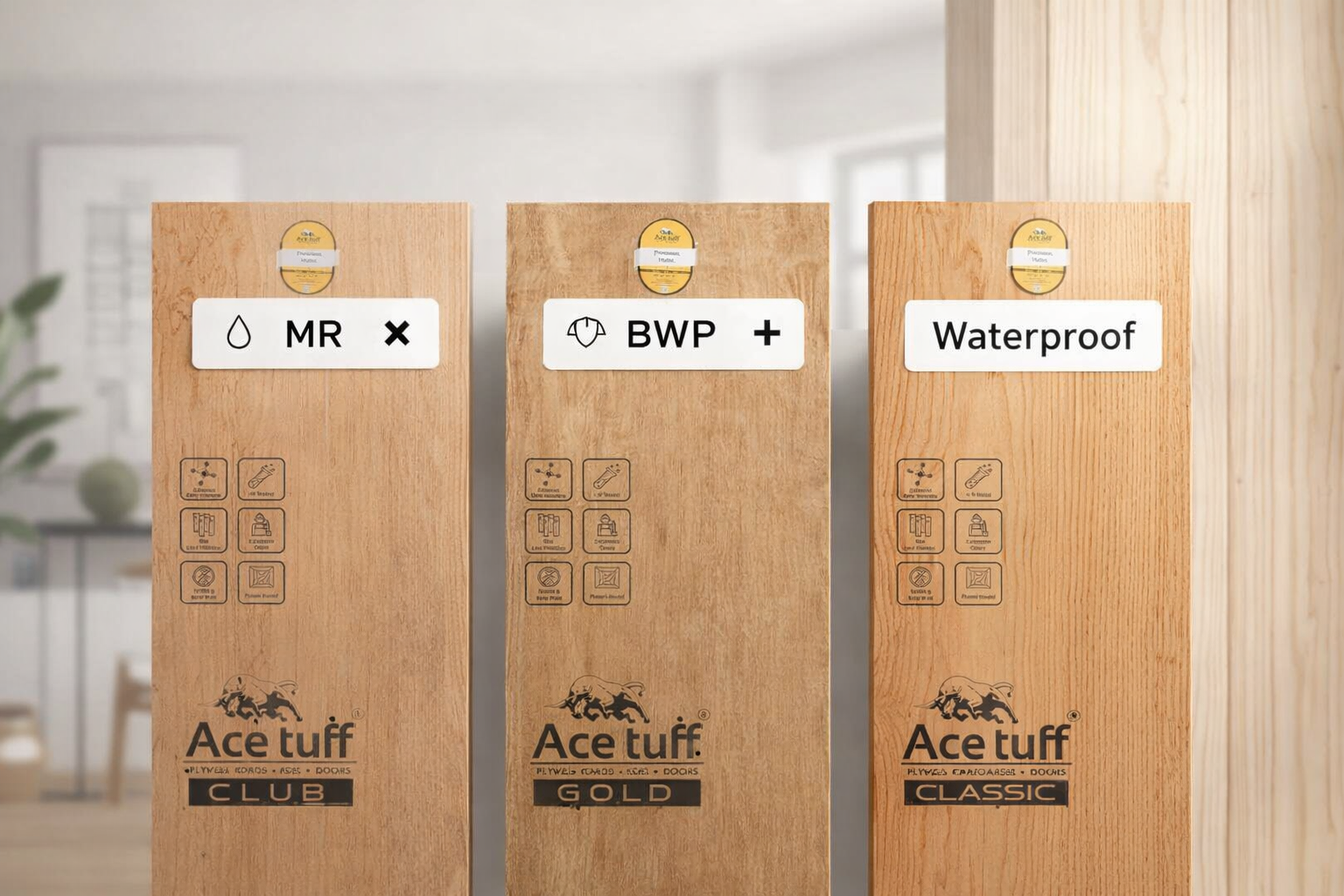
MR vs BWP vs Waterproof Plywood: Which Type Do Leading Brands Recommend for Homes?
- March 6, 2026
Selecting the right plywood for your home can be confusing, especially when you encounter terms like MR, BWP, and Waterproof plywood. Many homeowners assume all plywood performs the same, but the reality is different. Each type is engineered for specific environmental conditions.
Imagine installing kitchen cabinets with the wrong plywood. Within months, moisture may cause swelling, joints may loosen, and the furniture may lose its structural strength. This is why understanding the differences between plywood grades is essential before starting any interior project.
In this guide, we will explain the differences between MR plywood, BWP plywood, and waterproof plywood, where each type should be used in homes, and how leading manufacturers like Ace Tuff Ply (acetuffply) design plywood solutions to meet modern residential needs.
Understanding the Types of Plywood Used in Homes
Plywood used in residential interiors is classified based on moisture resistance, bonding strength, and durability. These characteristics determine where each plywood grade should be installed.
The three most commonly used plywood types in homes include:
- MR (Moisture Resistant) Plywood
- BWP (Boiling Water Proof) Plywood
- Waterproof or Marine Plywood
Each of these performs differently depending on the level of moisture exposure.
Pro Tip:
Before choosing plywood, identify whether the area is dry, semi-moist, or frequently exposed to water. This simple step helps prevent long-term damage to furniture.
MR Plywood for Dry Interior Use
MR plywood, also known as Moisture Resistant plywood, is primarily designed for interior spaces where exposure to water is minimal.
Where MR Plywood Works Best
MR plywood is ideal for:
- Bedroom wardrobes
- Living room furniture
- Bookshelves and cabinets
- TV units and wall panels
In these areas, the environment remains relatively dry, so MR plywood performs reliably without the need for higher moisture resistance.
For example, if you are building a wardrobe in a bedroom, MR plywood provides excellent structural stability and smooth finishing surfaces.
Ace Tuff MR Moisture Resistance boards are specifically engineered for such applications, helping furniture retain its shape and finish over time.
Why Homeowners Prefer MR Plywood
- Economical compared to higher-grade plywood
- Suitable for dry interior environments
- Provides stable furniture construction
Pro Tip:
Avoid using MR plywood in kitchens or bathrooms. Even occasional moisture exposure can weaken the bonding layers.
BWP Plywood for Moisture-Prone Areas
BWP plywood stands for Boiling Water Proof plywood. It is manufactured using stronger adhesives and advanced bonding techniques to handle higher humidity and occasional water exposure.
Ideal Applications of BWP Plywood
BWP plywood is commonly used in areas such as:
- Kitchen cabinets and shutters
- Utility storage units
- Laundry areas
- Semi-moist interior spaces
Consider a typical kitchen environment. Steam from cooking, water spills near sinks, and fluctuating humidity levels can gradually affect ordinary plywood. BWP plywood is designed to resist swelling, warping, and layer separation under these conditions.
Ace Tuff BWR and BWP boards are manufactured to withstand such environments while maintaining structural stability.
Key Advantages of BWP Plywood
- Higher moisture resistance compared to MR plywood
- Improved bonding strength
- Suitable for kitchen and semi-wet areas
Pro Tip:
If you’re unsure whether a space will face moisture exposure, choosing BWP plywood instead of MR plywood adds an extra layer of protection.
Waterproof Plywood for High Water Exposure
Waterproof plywood, often referred to as marine plywood, is engineered to withstand continuous and prolonged exposure to water.
This type of plywood uses high-grade adhesives and superior manufacturing processes to ensure strong bonding even under extreme moisture conditions.
Common Uses of Waterproof Plywood
Waterproof plywood is recommended for:
- Bathroom vanity cabinets
- Washroom storage units
- Outdoor furniture structures
- Areas exposed to frequent water contact
For example, a bathroom vanity cabinet installed near a sink constantly faces water splashes and humidity. Using ordinary plywood here may result in swelling and structural damage. Waterproof plywood ensures long-term durability.
Benefits of Waterproof Plywood
- Highest resistance to water exposure
- Strong bonding that prevents delamination
- Ideal for wet environments
Pro Tip:
Marine plywood is more expensive, so use it only where water exposure is unavoidable to optimize your project budget.
Applications of Plywood in Different Areas of the Home
Choosing the right plywood for each area ensures long-lasting furniture and structural stability.
Living Rooms and Bedrooms
These spaces are generally dry and require furniture with good finishing and structural strength.
Suitable plywood: MR plywood
Common applications:
- Wardrobes
- Bed frames
- Storage cabinets
- Decorative panels
Pro Tip:
Use MR plywood with laminate or veneer finishing for a polished interior look.
Kitchens and Utility Areas
Kitchens experience steam, humidity, and occasional water spills.
Suitable plywood: BWP plywood
Common applications:
- Kitchen cabinets
- Drawer units
- Utility storage
Ace Tuff BWR and BWP boards are ideal for kitchen interiors due to their improved moisture resistance and durability.
Pro Tip:
Seal plywood edges properly during installation to prevent moisture penetration.
Bathrooms and Wash Zones
Bathrooms face frequent water contact and high humidity.
Suitable plywood: Waterproof / Marine plywood
Common applications:
- Vanity cabinets
- Bathroom storage
- Wash area furniture
Pro Tip:
Always combine waterproof plywood with proper surface laminates and sealing for maximum lifespan.
Key Performance Features That Differentiate Plywood Types
Understanding performance features helps homeowners make smarter choices.
Moisture Resistance
- MR Plywood: Handles mild humidity
- BWP Plywood: Resists moisture and occasional water contact
- Waterproof Plywood: Designed for continuous water exposure
Bonding Strength
Stronger adhesives are used in BWP and waterproof plywood to prevent layer separation.
Durability
Higher moisture resistance generally leads to longer service life, especially in kitchens and bathrooms.
Termite Resistance
Modern plywood products from Ace Tuff Ply (acetuffply) include treatments that help protect furniture from termite attacks.
Pro Tip:
Always verify the plywood grade and IS certification before purchasing.
MR vs BWP vs Waterproof Plywood: A Clear Comparison
| Plywood Type | Cost & Performance | Suitable Areas | Recommended Variant |
|---|---|---|---|
| MR Plywood | Economical, designed for dry interiors | Bedrooms, wardrobes, furniture | Ace Tuff MR Moisture Resistant Board |
| BWP Plywood | Strong moisture resistance | Kitchens, utility areas | Ace Tuff BWR / BWP Boards |
| Waterproof / Marine Plywood | Highest water resistance | Bathrooms and wet zones | Marine Grade Plywood |
Why Choose acetuffply for MR, BWP, and Waterproof Plywood
Ace Tuff Ply (acetuffply) develops plywood solutions tailored for modern residential interiors.
Key advantages include:
- Clearly defined plywood grades for different applications
- Reliable bonding strength and panel stability
- Termite-resistant treatments
- Compliance with Indian quality standards
These features ensure homeowners and interior designers can choose the right material with confidence.
Pro Tip:
When selecting plywood for your home, always match the plywood grade with the moisture level of the space.
Buying Tips Before Selecting Plywood
Choosing plywood involves more than just comparing prices.
Consider these practical guidelines:
- Identify whether the space is dry, humid, or wet
- Select the correct plywood grade accordingly
- Choose appropriate thickness based on furniture load
- Check for ISI certification and manufacturer credibility
- Ensure proper installation and edge sealing
These steps help avoid costly repairs and ensure long-lasting furniture.
Pro Tip:
Investing in the correct plywood grade at the beginning can significantly increase the lifespan of your interiors.
Conclusion
Understanding the differences between MR plywood, BWP plywood, and waterproof plywood is essential for building durable home interiors.
- MR plywood is ideal for dry interior spaces like bedrooms and living rooms.
- BWP plywood performs well in kitchens and areas exposed to moisture.
- Waterproof plywood is necessary for bathrooms and environments with continuous water exposure.
By selecting the correct plywood grade for each part of the home, homeowners can prevent swelling, structural damage, and premature furniture failure.