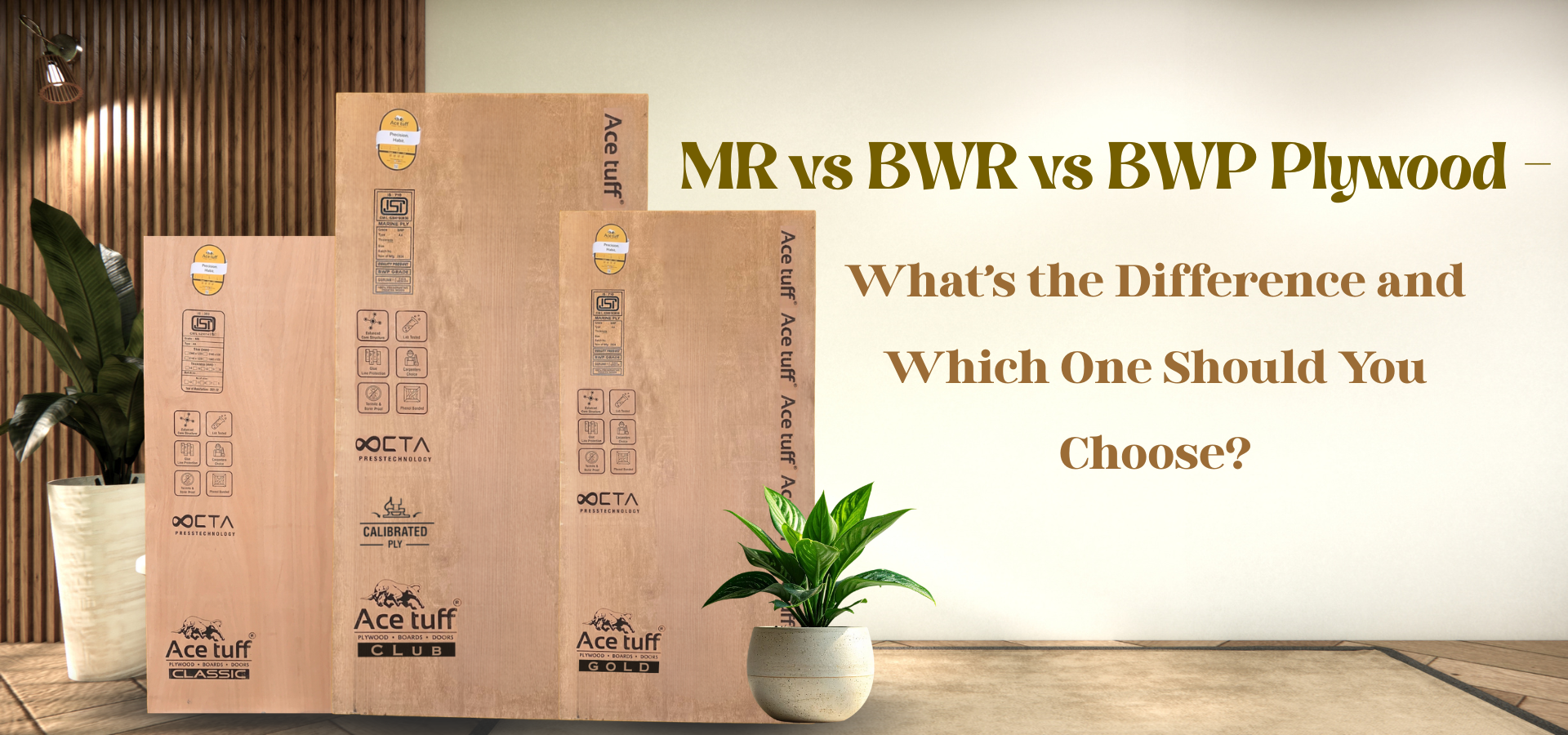
MR vs BWR vs BWP Plywood – What’s the Difference and Which One Should You Choose?
- February 14, 2026
Introduction
Choosing the right plywood for your home interiors, modular kitchen, or office furniture can feel confusing. When you hear terms like MR plywood, BWR plywood, and BWP plywood, they may sound technical — but the real difference lies in how they perform in moisture and water conditions.
Imagine installing a beautiful modular kitchen, only to see the cabinets swell near the sink after one monsoon. Or noticing your wardrobe edges warp because the plywood couldn’t handle humidity. In most cases, the issue isn’t design or workmanship — it’s choosing the wrong plywood grade.
This guide will clearly explain the difference between MR, BWR, and BWP plywood, where each type should be used, and how to choose the right one for your project.
1. What Does MR, BWR, and BWP Mean?
Let’s understand each plywood type in simple, practical terms.
MR Plywood (Moisture Resistant Plywood)
MR stands for Moisture Resistant. It is also known as Commercial Plywood.
This plywood can resist humidity and light dampness but is not waterproof. It is manufactured using urea formaldehyde resin, making it suitable for dry indoor spaces.
Where is MR Plywood Used?
- Wardrobes
- TV units
- Shelves
- Office furniture
- Bedroom partitions
Where Should You Avoid MR Plywood?
- Modular kitchens
- Bathrooms
- Under-sink storage
- Outdoor furniture
Cost Category
Low (Most budget-friendly option)
Real-Life Example
A bedroom wardrobe in a dry, ventilated room performs perfectly with MR plywood. But if the same plywood is used under a kitchen sink, swelling and edge damage may occur over time.
Pro Tip
Choose MR plywood only for areas with minimal moisture exposure. It is economical and practical for dry interiors.
BWR Plywood (Boiling Water Resistant Plywood)
BWR stands for Boiling Water Resistant.
This plywood is made using phenolic resin, which makes it highly resistant to water. It can handle occasional water exposure and kitchen humidity.
Where is BWR Plywood Used?
- Modular kitchen cabinets
- Utility areas
- Bathroom storage units
- Semi-outdoor furniture
Where Should You Avoid BWR Plywood?
- Areas exposed to constant or long-term water immersion
Cost Category
Medium (Balanced durability and cost)
Real-Life Example
In a modular kitchen, steam from cooking and occasional water splashes are common. BWR plywood performs reliably in these conditions without warping or delamination.
Pro Tip
For most modular kitchens, BWR plywood offers the best balance between durability and investment.
BWP Plywood (Boiling Waterproof Plywood)
BWP stands for Boiling Waterproof.
It is designed to withstand long-term water exposure and even full immersion. It also uses phenolic resin but meets stricter waterproofing standards.
Where is BWP Plywood Used?
- Bathroom cabinets
- Under-sink storage
- Coastal homes
- High-humidity regions
- Premium modular kitchens
Where Should You Avoid BWP Plywood?
- Dry areas where moisture exposure is minimal
Cost Category
High (Premium-grade protection)
Real-Life Example
Homes near coastal areas face high humidity year-round. BWP plywood prevents swelling, bending, and separation even in extreme moisture conditions.
Pro Tip
Use BWP plywood wherever there is a risk of water leakage. It prevents expensive repairs later.
2. Key Differences: MR vs BWR vs BWP Plywood
Understanding their core differences helps you choose wisely.
Water Resistance
- MR Plywood – Resists humidity but not direct water
- BWR Plywood – Handles short-term water exposure
- BWP Plywood – Fully waterproof and handles long-term exposure
Resin Used
- MR – Urea Formaldehyde
- BWR – Phenolic Resin
- BWP – Phenolic Resin (Higher waterproof grade)
Ideal Usage Areas
- MR – Wardrobes, indoor furniture, partitions
- BWR – Modular kitchens, moisture-prone interiors
- BWP – Bathrooms, under-sink cabinets, coastal areas
Investment Level Comparison
- MR Plywood – Low investment
- BWR Plywood – Medium investment
- BWP Plywood – High investment
Actionable Insight
Always match plywood grade with moisture exposure level. Saving money on plywood in wet areas can lead to higher long-term maintenance costs.
3. Which Plywood Should You Choose for Your Project?
Let’s simplify the decision with practical scenarios.
For Wardrobes, TV Units, and Partitions
Recommended: MR Plywood
These areas are usually dry and protected from water exposure.
Benefit: Budget-friendly and suitable for indoor use.
For Modular Kitchens
Recommended: BWR Plywood
Kitchens experience steam, water splashes, and humidity daily.
Benefit: Protects cabinets from swelling and improves durability.
For Bathroom Cabinets and Under-Sink Storage
Recommended: BWP Plywood
Bathrooms and sink areas face continuous moisture risk.
Benefit: Ensures maximum protection against water damage.
For Coastal or High-Humidity Locations
Recommended: BWP Plywood
Constant humidity can affect lower-grade plywood.
Benefit: Long-term structural stability in harsh climates.
4. Investment Comparison by Thickness
The investment level typically increases with both thickness and waterproof capability.
MR Plywood
- 6mm – Low
- 12mm – Low to Medium
- 18mm – Medium
BWR Plywood
- 6mm – Medium
- 12mm – Medium
- 18mm – Medium to High
BWP Plywood
- 6mm – Medium to High
- 12mm – High
- 18mm – High
Pro Tip
When planning furniture, always balance thickness and plywood grade. For example, an 18mm MR plywood may still fail in wet areas compared to a 12mm BWP plywood.
5. Why Choose Acetuffply for MR, BWR, and BWP Plywood?
Selecting the right plywood is not just about grade — it’s also about quality consistency.
Acetuffply ensures:
- Reliable MR, BWR, and BWP plywood grades
- Strict quality control standards
- Strong bonding strength
- Termite-treated options
- Suitable solutions for residential and commercial projects
Whether you are building a modular kitchen, wardrobes, or bathroom cabinets, choosing the correct plywood grade from a trusted manufacturer ensures long-term durability and peace of mind.
6. Frequently Asked Questions
What is the main difference between BWR and BWP plywood?
BWR plywood resists short-term water exposure, while BWP plywood is designed for long-term water resistance and immersion.
Can MR plywood be used in kitchens?
No. Kitchens involve water exposure and humidity. BWR plywood is the safer choice.
Which plywood is best for bathroom cabinets?
BWP plywood is ideal because of its superior waterproof properties.
Which plywood is most economical?
MR plywood is the most cost-effective option for dry indoor furniture.
7. Final Thoughts
Choosing between MR, BWR, and BWP plywood becomes simple when you understand moisture exposure levels.
- Use MR plywood for wardrobes and dry indoor areas.
- Use BWR plywood for modular kitchens and moisture-prone interiors.
- Use BWP plywood for bathrooms, under-sink storage, and coastal homes.
Selecting the right plywood grade protects your furniture investment, reduces maintenance costs, and ensures long-term durability.
If you are planning your next interior project, consult Acetuffply experts to select the right plywood based on usage, environment, and performance expectations.