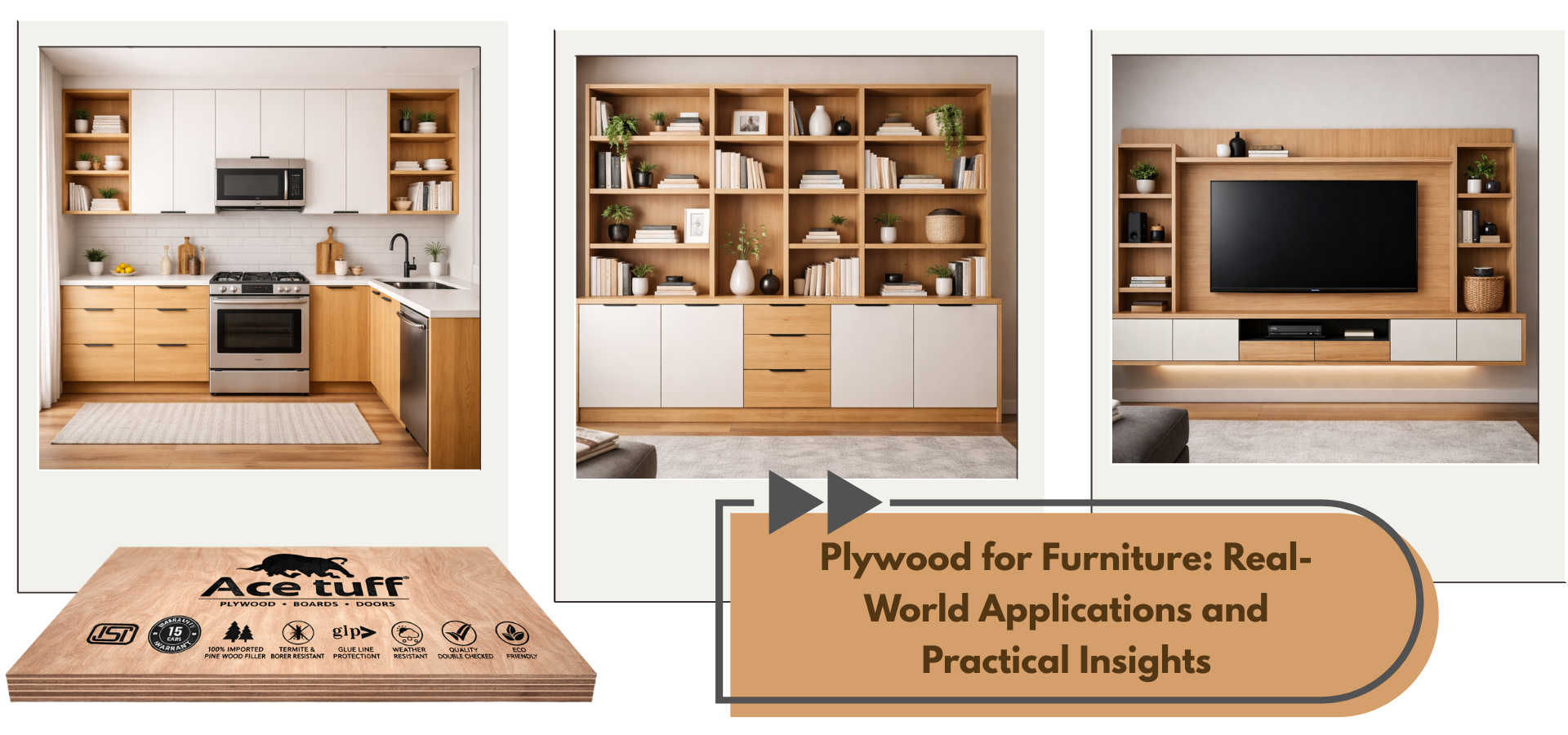
Plywood for Furniture: Real-World Applications and Practical Insights
- March 11, 2026
Furniture is often judged by its design, color, or finish. But behind every durable wardrobe, kitchen cabinet, or TV unit lies a more important factor — the quality of the plywood used inside.
Imagine installing a beautiful wardrobe in your bedroom. It looks perfect on day one, but after a year, the shutters start bending or drawers stop sliding smoothly. Most of the time, the reason is simple: the wrong plywood was used for the job.
That’s why understanding plywood for furniture is crucial when planning interiors. Choosing the right plywood ensures durability, structural stability, and long-term performance.
In this guide, we’ll explore real-world applications of plywood, practical examples from everyday homes, and expert insights that help you make smarter decisions for your furniture.
Why Plywood is the Preferred Choice for Furniture
Plywood has become the backbone of modern furniture manufacturing because it combines strength, stability, and versatility.
Unlike solid wood, plywood is created by bonding multiple layers of wood veneers in alternating directions, which significantly improves durability and resistance to warping.
This structure makes plywood ideal for furniture that needs to handle daily wear and tear.
Key Advantages of Using Plywood for Furniture
• High Load-Bearing Strength – Handles heavy items such as books, appliances, and storage units.
• Excellent Screw Holding Capacity – Ensures strong joints and stable furniture structures.
• Better Dimensional Stability – Less expansion and contraction with weather changes.
• Versatile Finishing Options – Works well with laminates, veneers, paint, and polish.
Real-Life Example
Consider a living room TV unit holding a large television, speakers, and storage drawers. If the base board is weak, it may sag over time. Using high-quality plywood ensures the structure remains stable for years.
Pro Tip
Always choose high-density plywood with strong bonding when building load-bearing furniture like cabinets or wall units.
Using Plywood for Living Room Furniture
The living room is one of the most visible areas of a home, and furniture here must combine design with durability.
Let’s explore two common applications.
Plywood for TV Units
A TV unit supports expensive electronics and often includes drawers, shelves, and wall mounts. This means the plywood must be strong enough to hold weight without bending.
Best Practices for TV Unit Construction
• Use water-resistant plywood if the unit is placed near windows or humid areas.
• Choose thicker boards for wall-mounted units to avoid sagging.
• Ensure edges are properly sealed with edge banding to prevent damage.
Pro Tip
For floating TV units, always use thicker plywood panels and proper wall anchors to maintain structural safety.
Plywood Bookshelves and Storage Units
Bookshelves may appear simple, but they carry significant weight. Thin or low-quality boards can bend or crack over time.
Practical Guidelines
• Use thicker plywood panels for long shelves.
• Avoid soft core plywood for heavy book storage.
• Ensure the back panel is properly supported to prevent leaning.
Real-World Insight
A bookshelf filled with textbooks can weigh over 40–50 kg. Using quality plywood prevents shelf bending and extends furniture life.
Pro Tip
For large shelves, add center supports to improve load distribution.
Plywood for Doors and Entry Furniture
In many Indian homes, plywood darwaja (plywood doors) are widely used because they are lightweight, durable, and easy to finish with laminates or veneers.
However, doors face constant opening, closing, and seasonal humidity changes, making plywood quality extremely important.
Important Factors for Plywood Doors
• A solid and dense core prevents warping.
• Good moisture resistance protects against humidity and cleaning.
• Ability to hold laminates, veneers, or door skins.
Real-Life Scenario
If low-quality plywood is used inside a door, the panel may twist during monsoon season, causing improper closing and visible gaps.
Pro Tip
Choose plywood with strong bonding and moisture resistance to maintain door alignment year-round.
Plywood for Storage Cabinets
Cabinets are used every day in kitchens, bedrooms, and offices. They carry heavy loads and require plywood that balances strength and stability.
Understanding the types of plywood for cabinets helps avoid structural problems later.
Key Factors When Choosing Cabinet Plywood
• Strong bonding for drawer joints.
• Resistance to moisture during cleaning.
• Stable panels that do not loosen with frequent use.
Suitable Plywood Types
• MR (Moisture Resistant) Plywood – Suitable for dry interior areas.
• BWP (Boiling Water Proof) Plywood – Ideal for moisture-prone spaces.
• Marine Grade Plywood – Best for high humidity environments.
Pro Tip
Use thicker plywood for base cabinets, as they carry the most weight.
Plywood for Kitchen Furniture
The kitchen is the most demanding environment for furniture because of heat, water, steam, and daily usage.
This is why selecting the best ply for kitchen cabinets becomes critical.
What Kitchen Plywood Must Handle
• Constant moisture exposure
• Heavy appliances and utensils
• Frequent opening and closing
Best Choice for Kitchen Applications
• BWP plywood
• Marine grade plywood
These types are specially designed to resist water damage and maintain bonding strength over time.
Common Kitchen Applications
Plywood is widely used in:
• Base storage cabinets
• Overhead cabinets
• Pantry units
• Full-height kitchen storage systems
Real-Life Example
In Indian kitchens where cooking involves steam and water splashes, using commercial plywood can cause swelling or laminate peeling within a few years.
Pro Tip
Always seal all exposed plywood edges to prevent moisture penetration.
How to Choose the Right Plywood for Furniture
Selecting plywood should never depend only on price. Each furniture type has different structural requirements.
Smart Selection Checklist
• Match plywood grade to the furniture location.
• Use thicker plywood for heavy furniture.
• Avoid mixing different grades within one furniture unit.
• Check certifications and manufacturer details.
Pro Tip
Always ask your carpenter about plywood thickness and grade before construction begins.
Why Branded Plywood Makes a Difference
Furniture problems rarely appear immediately. Issues such as bending shelves, loose joints, or swollen panels usually develop after months or years.
High-quality branded plywood ensures consistent core structure and strong adhesive bonding, which directly improves furniture lifespan.
Benefits of Quality Plywood
• Better finish compatibility
• Stronger and longer-lasting joints
• Improved structural durability
• Resistance to environmental changes
Pro Tip
Investing in good plywood initially can reduce furniture repair costs in the long run.
Common Mistakes to Avoid When Choosing Plywood
Many furniture failures happen because of simple mistakes during material selection.
Avoid These Errors
• Using thin plywood for heavy cabinets or shelves
• Choosing low-grade plywood for kitchens and bathrooms
• Ignoring edge sealing during installation
• Selecting materials purely based on low price
Pro Tip
Always discuss the intended use of furniture with your carpenter before selecting plywood.
Conclusion
Furniture durability depends not only on design but also on the right plywood selection. Whether you are building a TV unit, bookshelf, cabinets, doors, or kitchen storage, understanding how plywood performs in real-life conditions helps you avoid costly mistakes.
By choosing the correct plywood for furniture, matching the right grade to the right application, and following practical installation tips, homeowners can create furniture that remains strong, functional, and visually appealing for years.
The key takeaway is simple: smart plywood selection today leads to durable furniture tomorrow.