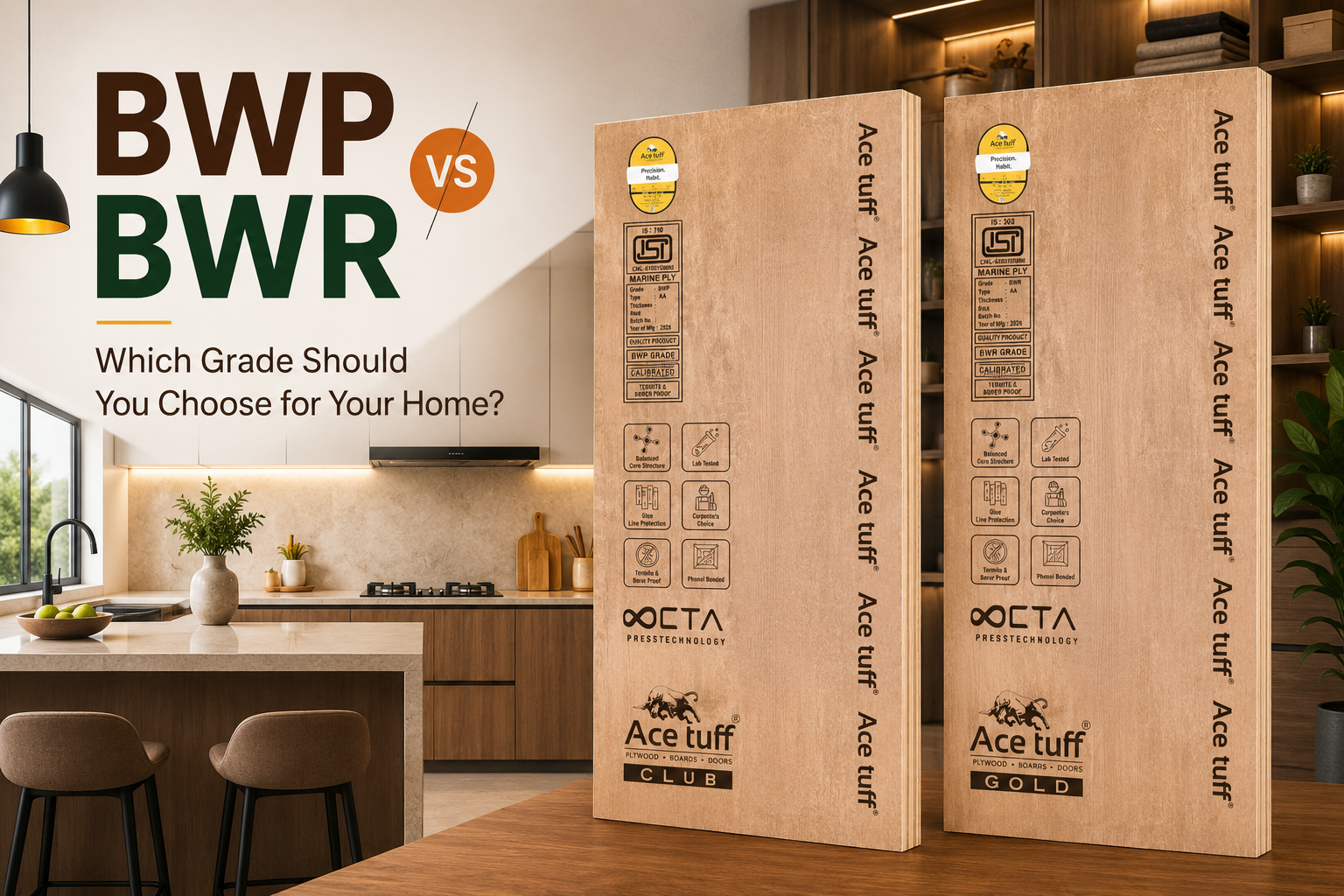
BWP vs BWR Plywood: Which Grade Should You Choose for Your Home?
- June 16, 2026
Introduction
Imagine you’ve finally completed your dream home’s interiors. The wardrobes look stunning, the kitchen shines, and every piece of furniture feels perfect.
But after a few years, you notice the kitchen cabinets beginning to swell near the sink. Bathroom storage units start losing their shape, and some furniture edges begin peeling.
What went wrong?
In many cases, the issue isn’t the design or craftsmanship—it’s choosing the wrong plywood grade.
When selecting plywood for home interiors, homeowners often come across terms like BWP plywood and BWR plywood. While they may sound similar, choosing the right grade can significantly impact the durability, performance, and lifespan of your furniture.
This guide will help you understand the difference between BWP vs BWR plywood, where each grade should be used, and how to make the best choice for your home.
Pro Tip
Always select plywood based on the room’s moisture exposure—not just the budget. A small investment in the right plywood today can save costly repairs later.
Understanding Plywood Grades: What Do BWP and BWR Really Mean?
Before choosing plywood, it’s important to understand what these grades actually represent.
Both BWP and BWR plywood are recognized under Indian quality standards and are designed for different levels of moisture resistance.
What is BWR Plywood?
BWR (Boiling Water Resistant) plywood is manufactured using high-quality synthetic resin adhesives that can resist moisture and humidity.
It performs well in normal indoor conditions where occasional moisture may be present but prolonged water exposure is unlikely.
Best Suited For:
- Wardrobes
- Study tables
- TV units
- Living room furniture
- Bedroom interiors
Pro Tip
BWR plywood offers an excellent balance between performance and affordability for dry indoor spaces.
What is BWP Plywood?
BWP (Boiling Water Proof) plywood is a premium-grade plywood manufactured using phenol-formaldehyde resin.
This stronger bonding technology allows the plywood to withstand continuous exposure to moisture, steam, and water without losing its structural integrity.
Best Suited For:
- Modular kitchens
- Bathroom vanities
- Under-sink cabinets
- Utility areas
- High-humidity zones
Pro Tip
If water exposure is expected at any point during the furniture’s lifespan, BWP plywood is usually the safer long-term investment.
Understanding Through a Real-Life Example
Let’s consider two homeowners.
Homeowner A
Chooses BWR plywood for the entire house, including the kitchen.
Initially, everything looks perfect. However, after four years of daily cooking, steam exposure, and occasional water leaks, the cabinets near the sink begin swelling.
Homeowner B
Uses BWP plywood in the kitchen and bathrooms while selecting BWR plywood for wardrobes and study furniture.
Ten years later, the kitchen remains strong, and the wardrobes continue looking as good as new.
The difference wasn’t the design.
It was choosing the right plywood grade for the right environment.
Plywood Grades Commonly Available in India
Understanding all available grades can help you make a smarter decision.
MR Grade (Moisture Resistant)
Suitable for dry indoor spaces with minimal moisture exposure.
Ideal Applications
- Bedroom furniture
- Study tables
- Decorative panels
BWR Grade (Boiling Water Resistant)
Offers better moisture resistance and durability for everyday interiors.
Ideal Applications
- Wardrobes
- TV units
- Living room furniture
- Home office furniture
BWP Grade (Boiling Water Proof)
Designed for areas exposed to water, steam, and humidity.
Ideal Applications
- Modular kitchens
- Bathroom cabinets
- Utility rooms
Marine Grade Plywood
Built for extreme moisture conditions and demanding environments.
Ideal Applications
- Coastal homes
- Commercial projects
- Outdoor structures
Where to Use BWP and BWR Plywood in Your Home
Kitchen Cabinets and Modular Kitchens
The kitchen experiences daily exposure to steam, water splashes, cooking heat, and humidity.
Using BWP plywood helps prevent:
- Swelling
- Delamination
- Surface damage
- Structural weakening
Recommended Choice
BWP Plywood
Pro Tip
Pay special attention to sink cabinets, corner units, and lower kitchen cabinets where water exposure is highest.
Wardrobes and Bedroom Furniture
Bedrooms generally remain dry and controlled throughout the year.
Wardrobes, dressing tables, and study furniture do not require the advanced waterproofing of BWP plywood.
Recommended Choice
BWR Plywood
Pro Tip
Invest the savings from BWR plywood into better laminates, hardware, and fittings for a more premium finish.
Bathroom Vanities and Under-Sink Units
Bathrooms constantly deal with moisture, steam, and condensation.
Furniture in these areas needs maximum protection against water damage.
Recommended Choice
BWP Plywood
Pro Tip
Even if water never directly touches the cabinet, humidity alone can damage lower-grade plywood over time.
Living Room Panels and Decorative Units
TV units, wall panels, bookshelves, and partitions usually remain in dry conditions.
Recommended Choice
BWR Plywood
Pro Tip
Combine quality BWR plywood with premium laminates or veneers for long-lasting aesthetics.
BWP vs BWR: A Direct Comparison
| Parameter | BWR Plywood | BWP Plywood |
|---|---|---|
| Full Form | Boiling Water Resistant | Boiling Water Proof |
| Water Resistance | Handles humidity and moisture | Handles continuous water exposure |
| Adhesive Type | Synthetic Resin Adhesive | Phenol Formaldehyde Resin |
| Ideal Usage | Wardrobes, TV Units, Study Furniture | Kitchens, Bathrooms, Utility Areas |
| Moisture Performance | Moderate | Excellent |
| Durability in Wet Areas | Moderate | High |
| Cost | More Affordable | Premium |
| Long-Term Value | Good for dry interiors | Best for wet areas |
| Furniture Lifespan | Good under normal conditions | Excellent under challenging conditions |
Pro Tip
Think of BWR as the right choice for comfort zones and BWP as insurance against moisture-related damage.
What Does the Price Difference Actually Buy You?
One of the most common questions homeowners ask is:
“Is BWP plywood worth the extra cost?”
The answer depends entirely on where you plan to use it.
In Kitchens and Bathrooms
The additional investment helps prevent:
- Cabinet replacement costs
- Repair expenses
- Water damage
- Frequent maintenance
In Bedrooms and Living Rooms
BWR plywood already delivers excellent performance, making BWP unnecessary in most cases.
Pro Tip
Instead of using one plywood grade throughout the home, create a room-wise plywood plan. This balances performance and budget efficiently.
Why Choose Acetuf Ply for BWP and BWR Plywood?
Choosing quality plywood is about more than just moisture resistance.
A reliable plywood brand should offer consistency, durability, and long-term performance.
Acetuf Ply products are designed to meet the evolving demands of modern interiors and furniture applications.
Key Advantages
- Strong and durable construction
- Excellent dimensional stability
- Superior bonding strength
- Resistance to moisture and humidity
- Termite-resistant treatment
- Suitable for both residential and commercial interiors
- Available in multiple thickness options
Pro Tip
Always verify the plywood grade before purchasing. The right certification and manufacturing standards ensure you’re getting the performance you expect.
Ready to Build Your Dream Interior?
The debate between BWP vs BWR plywood doesn’t have a single winner.
The best choice depends entirely on where the plywood will be used.
Choose BWP plywood for kitchens, bathrooms, and areas exposed to water.
Choose BWR plywood for wardrobes, study tables, TV units, and other dry indoor spaces.
When you match the plywood grade to the environment, you get stronger furniture, lower maintenance costs, and interiors that stay beautiful for years.
The right plywood isn’t simply about spending more—it’s about making a smarter decision for every room in your home.