Termite Damage in Indian Homes: Why Monsoon Season is the Biggest Threat to Your Furniture
- September 30, 2026
Author Name: Acetuffply
The first monsoon shower can feel like a welcome break after months of intense summer heat. But while you enjoy the cooler weather, something less welcome may be happening around damp walls, hidden corners, kitchen cabinets, and wooden furniture.
Termites thrive in environments where warmth and moisture are available.
This makes the Indian monsoon an important time to pay attention to plywood furniture. Increased humidity, water seepage, plumbing leaks, and poor ventilation can create conditions that increase the risk of termite activity.
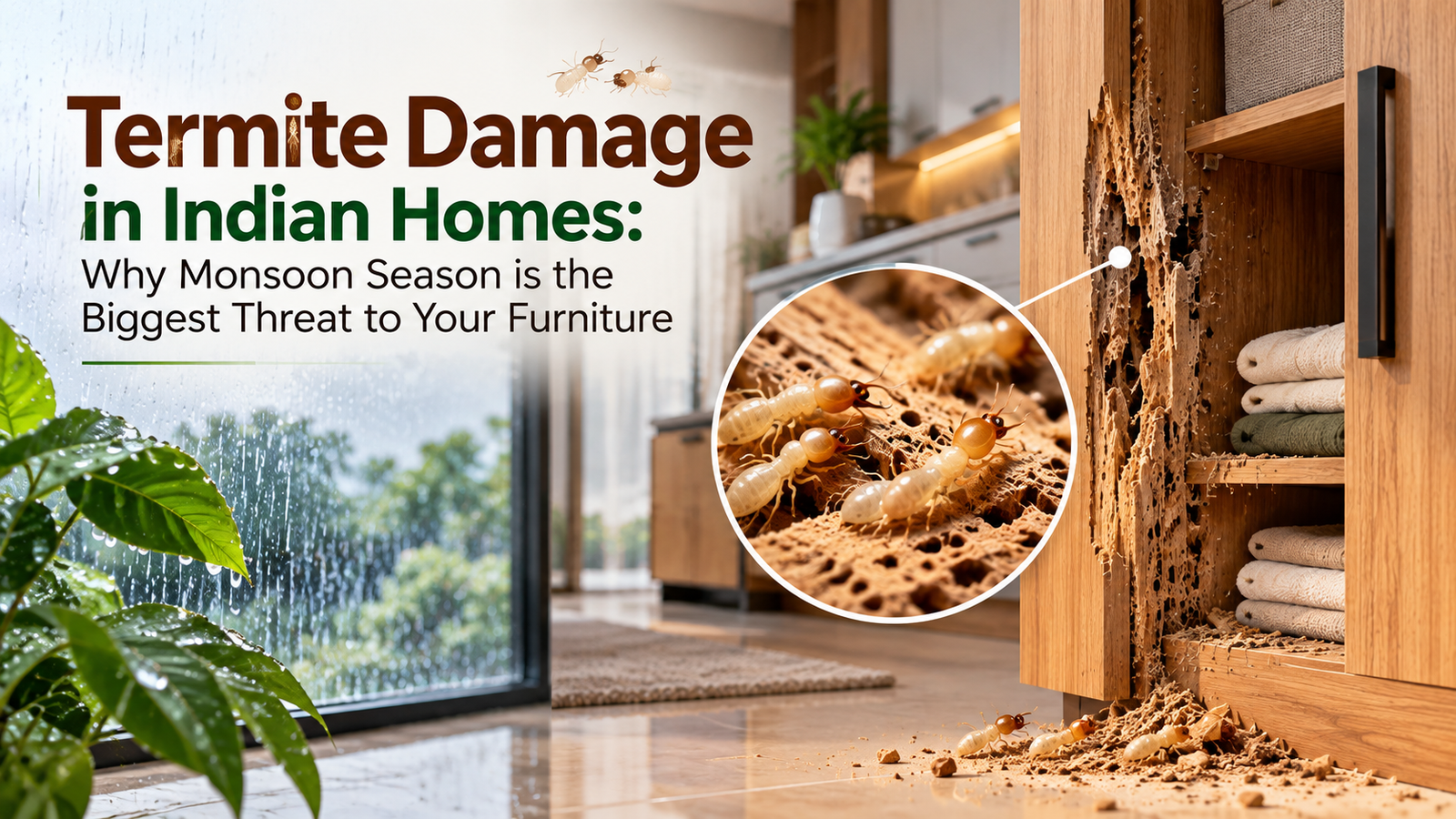
The challenge is that termite damage to furniture isn’t always immediately visible. Termites can remain concealed within wood and plywood, so a wardrobe or cabinet may appear perfectly normal from the outside while damage develops internally.
The good news is that homeowners can reduce these risks. Understanding moisture, recognising early warning signs, choosing suitable termite-resistant plywood, and following basic preventive measures can help protect furniture for the long term.
Let’s understand what happens during monsoon and what you can do about it.
Why Does Monsoon Increase the Risk of Termite Damage?
Imagine a wardrobe positioned against a bedroom wall.
During summer, the wall remains relatively dry. Once the monsoon begins, however, persistent rain causes the wall to absorb moisture. The wardrobe receives little airflow because its back sits close to the wall.
Over time, this creates a warm, humid, poorly ventilated space.
These are conditions in which termite-related problems can become a greater concern.
During monsoon, several factors may increase moisture around furniture:
- High indoor humidity
- Damp walls
- Water seepage
- Leaking plumbing
- Wet flooring
- Poor ventilation
- Furniture positioned directly against damp surfaces
Enclosed spaces such as wardrobes, kitchen base cabinets, storage beds, and cabinets under sinks deserve particular attention because trapped moisture may take longer to dry.
Pro Tip
After heavy rainfall, inspect walls behind or beside fixed furniture. If you notice damp patches, peeling paint, mould, or persistent moisture, identify and repair the source rather than simply covering the affected area.
Key Takeaway: Effective termite prevention during monsoon starts with moisture management.
How Do Termites Damage Furniture and Woodwork?
Termites can be difficult to detect because they may feed and travel through concealed areas.
Plywood-based furniture commonly found in Indian homes includes:
- Wardrobes
- Modular kitchens
- Beds
- Storage cabinets
- TV units
- Study tables
- Doors
- Wall-mounted furniture
Because much of the plywood in these applications remains hidden after installation, termite activity may not become obvious immediately.
Signs of Possible Termite Damage
Watch for symptoms such as:
- hollow-sounding wooden sections,
- small holes or openings,
- weakened or crumbling areas,
- mud-like trails or tubes,
- discarded wings, and
- unexplained deterioration around wooden furniture.
No single symptom should automatically be treated as proof of termites, but unusual changes deserve investigation.
Real-World Example
Suppose a homeowner notices that one corner of a kitchen cabinet has become weak.
At first, they assume water from the sink caused the problem. On closer inspection, however, there are unusual trails near the cabinet and damage extending beyond the wet area.
This is why knowing how to identify termite damage can be useful. What initially looks like ordinary moisture damage may require closer inspection.
Pro Tip
Don’t wait until furniture becomes visibly weak. Periodically inspect concealed areas, particularly around kitchens, bathrooms, storage furniture, and damp walls.
If you suspect active termites, consult a qualified pest-control professional.
Why Plywood Selection Matters Before the Monsoon
When homeowners choose plywood, appearance and price often receive most of the attention.
But the decorative finish isn’t the only thing that determines how well furniture performs over time.
Before buying plywood, consider:
Strength + moisture requirements + termite protection + application + durability
This becomes particularly important for long-term furniture such as wardrobes, kitchens, beds, and built-in storage.
Choosing termite-resistant plywood at the material-selection stage adds a preventive layer rather than waiting until furniture has already been installed.
Pro Tip
If you’re renovating before monsoon, prepare a room-by-room plywood specification with your carpenter or interior designer instead of purchasing one plywood type for every application.
Which Materials Can Offer Better Protection Against Termites?
There is an important distinction between ordinary plywood and plywood specifically manufactured with termite-protection features.
When comparing plywood, don’t rely solely on terms such as “termite proof” or “anti-termite” printed on packaging.
Understand the technology behind the claim.
Ask questions such as:
- How is the termite protection incorporated?
- Is protection limited to the surface or integrated deeper into the plywood?
- What testing supports the claim?
- What warranty or assurance is provided?
- Which plywood grade is suitable for my application?
- What moisture resistance does the plywood provide?
For Acetuffply customers, the appropriate plywood should be selected according to the specific furniture application and the product’s verified technical specifications.
Pro Tip
Ask your plywood dealer for the manufacturer’s technical information before buying. A clear specification is more useful than relying only on a salesperson’s verbal claim.
Surface Treatment vs Built-In Termite Protection
Traditional anti-termite treatment for wood may involve applying protective chemicals to exposed areas.
This can play a role in termite management, but plywood undergoes significant modification while furniture is being manufactured.
A carpenter may:
- cut sheets,
- drill holes,
- trim edges,
- make grooves,
- install hinges,
- add screws, and
- join multiple plywood components.
This is why integrated termite-protection technologies are increasingly relevant when evaluating plywood.
Instead of thinking only about treating finished furniture, homeowners can consider termite protection when selecting the material itself.
Pro Tip
When comparing termite-proof plywood, ask how the protection performs after normal fabrication processes such as cutting and drilling.
Where Does Termite Protection Matter Most?
While termite prevention matters throughout a home, certain furniture applications deserve additional attention during monsoon.
Kitchen Cabinets
Kitchens combine plywood, plumbing, water, heat, and enclosed storage.
The area beneath the sink is particularly important because even a minor plumbing leak can keep the cabinet damp for an extended period.
Pro Tip: Check underneath the kitchen sink regularly during monsoon. Fix even small leaks promptly instead of allowing the cabinet to remain damp.
Wardrobes
Wardrobes are often placed close to walls and may receive limited airflow.
During monsoon, humidity can remain trapped inside, particularly when wardrobes are rarely opened.
Pro Tip: Allow occasional airflow inside wardrobes and investigate any dampness on the adjoining wall.
Beds and Storage Furniture
Hydraulic beds and storage beds contain large enclosed areas and usually remain in the same location for years.
This makes material selection particularly important.
Pro Tip: Occasionally inspect the internal corners and floor-facing areas of storage beds instead of checking only the visible exterior.
TV Units and Living-Room Storage
TV units and built-in storage may contain plywood positioned directly against walls.
If the wall develops seepage during monsoon, the moisture problem can remain hidden behind the furniture.
Pro Tip: After prolonged rainfall, check walls adjacent to fixed furniture for unusual dampness or odour.
Doors and Other Interiors
Door frames, cabinets, and furniture close to floors or walls may be exposed to moisture from seepage, wet cleaning, or damp surfaces.
Pro Tip: Don’t allow water to remain around plywood furniture edges after floor cleaning.
5 Common Monsoon Mistakes That Can Increase Termite Risk
Sometimes the biggest problem isn’t the rain itself. It’s how moisture is managed inside the home.
1. Ignoring Damp Walls
A small damp patch may appear harmless, but persistent moisture deserves attention.
Pro Tip: Find the source of seepage instead of simply repainting over it.
2. Delaying Plumbing Repairs
A slow leak beneath a sink can expose furniture to moisture continuously.
Pro Tip: Include kitchen and bathroom plumbing checks in your pre-monsoon home maintenance.
3. Choosing Plywood Only by Price
The cheapest plywood may not necessarily offer the performance required for a particular application.
Pro Tip: Compare grade, thickness, termite protection, moisture performance, relevant standards, and warranty—not just price per sheet.
4. Poor Ventilation
Closed wardrobes and storage areas can retain humidity.
Pro Tip: Improve airflow where practical and avoid leaving already damp furniture permanently sealed.
5. Waiting for Major Visible Damage
Termite activity can remain concealed.
Pro Tip: Make periodic furniture inspection part of your maintenance routine, especially during and immediately after monsoon.
Termite Resistance and Waterproofing Are Different
This distinction is important.
Termite-resistant plywood and water-resistant or waterproof plywood are not automatically the same thing.
Termite protection addresses pest-related risk.
Water or moisture resistance addresses how plywood performs when exposed to moisture.
For example, both a bedroom wardrobe and a kitchen sink cabinet may benefit from termite protection, but their moisture exposure can be very different.
That means the appropriate plywood specification may also differ.
Pro Tip
Use this simple formula while selecting plywood:
Application + Moisture Exposure + Structural Requirement + Termite Protection = Better Material Selection
Don’t choose a plywood grade based on one feature alone.
A Simple Pre-Monsoon Furniture Checklist
Before the rainy season begins, spend a little time checking vulnerable areas around your home.
Look for:
- leaking pipes,
- damp walls,
- water seepage,
- poor ventilation,
- unusual holes in furniture,
- hollow or weakened wooden areas,
- mud-like trails,
- moisture below sinks, and
- hidden dampness behind fixed furniture.
A short inspection can help you identify potential problems before they become more difficult or expensive to address.
Pro Tip
Take photographs of areas prone to seepage before monsoon. Comparing them after several weeks of rain can make new damp patches or deterioration easier to notice.
How to Protect Plywood from Termites During Monsoon
There isn’t one single solution.
A more effective approach combines material selection, moisture control, proper installation, inspection, and professional treatment when required.
Homeowners can:
- Choose suitable termite-resistant plywood for new furniture.
- Select the correct plywood grade for moisture-prone applications.
- Repair plumbing leaks quickly.
- Address wall seepage.
- Maintain reasonable ventilation.
- Keep furniture areas dry.
- Inspect concealed furniture periodically.
- Seek professional pest-control assessment if termite activity is suspected.
Pro Tip
Think about termite protection before furniture fabrication, not only after installation. Preventive material selection is easier than replacing damaged built-in furniture later.
Why Consider Acetuffply for Your Furniture?
Furniture is a long-term investment, and the plywood underneath the decorative surface plays an important role in its performance.
When selecting Acetuffply for wardrobes, kitchens, beds, TV units, storage furniture, and other interiors, choose the appropriate product according to its verified grade, thickness, moisture performance, termite-protection features, applicable standards, and warranty.
Rather than selecting plywood based only on appearance or price, understanding these specifications can help you make a more informed decision for your home.
Pro Tip
Before purchasing Acetuffply, ask your authorised dealer for the technical specifications and warranty applicable to the exact plywood product you’re considering.
Protect Your Interiors Before Termites Become a Problem
Monsoon doesn’t mean your furniture will automatically develop a termite problem. But increased moisture, humidity, seepage, and poor ventilation can create conditions that deserve greater attention.
The most practical approach is prevention.
Control moisture. Fix leaks. Improve ventilation where needed. Inspect hidden furniture areas. And when building or renovating, choose plywood based on the actual environment in which it will be used.
For homeowners wondering how to protect plywood from termites, the key lesson is simple:
Don’t wait for visible damage before thinking about protection.
Start with better material selection and continue with sensible home maintenance.
With the right plywood, appropriate application, proper installation, and regular care, your furniture can be better prepared not only for the next monsoon—but for many seasons ahead.
Acetuffply — build your furniture with long-term performance in mind.